Active soil or inert sand? How deep, how to cap it, and how to survive the ammonia spike from a fresh aqua soil tank. Everything we tell customers before they buy substrate.
Substrate is the one part of an aquascape you can't easily change later — once it's under an inch of gravel, driftwood, and root systems, redoing it means tearing the tank down. Yet it's also the single biggest lever for how well your plants grow, whether your water stays clear, and how long the whole layout lasts before it needs a rebuild. Here are the 10 things we walk every customer through before they choose a substrate.
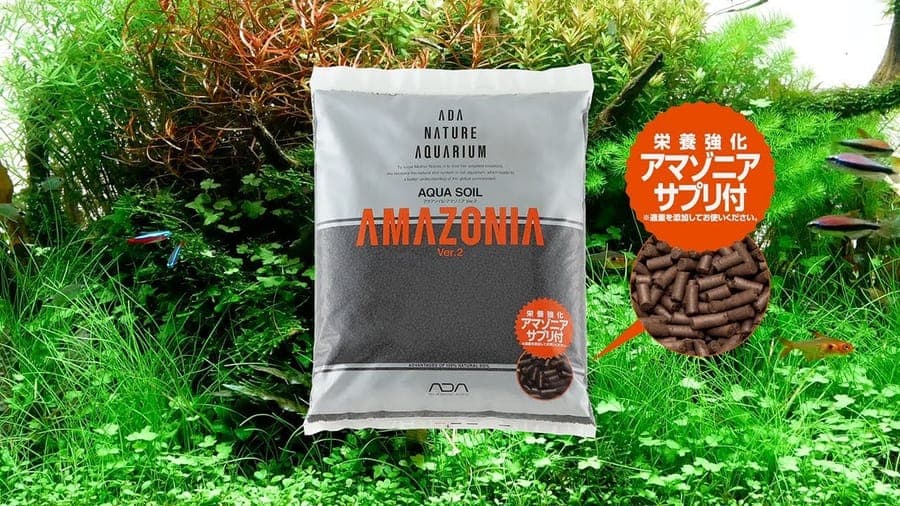
ADA Amazonia: Active, buffers pH to 6.0-6.8, very high initial nutrient release, needs 2-4 week mineralization before sensitive livestock. Best for stem-plant-heavy, high-tech layouts. Tropica Aquarium Soil: Active, gentler buffering than Amazonia, lower ammonia spike, good middle ground for planted beginners. Inert sand (pool filter sand, ADA La Plata): No chemical effect on water, safe immediately, requires root tabs and column dosing. Plain gravel: No chemical effect, larger grain size makes root anchoring harder for fine-rooted carpet plants — better suited to hardier species or fish-only setups.
Start with a base layer of active soil or a nutrient-rich amendment at the back and sides where plants will root deepest. Slope it from back to front — roughly double the depth at the back compared to the front — using a plastic divider or piece of cardboard temporarily to hold the slope while you build it. If capping, add sand in a thin, even layer only after the base layer is fully shaped, pouring gently along the glass to avoid mixing the two layers together.
Cloudy water in the first days after filling: normal with active soil — it's fine dust settling, not a cycling problem. Let the filter run and it typically clears within 24-48 hours; avoid full water changes, which just stir it up again. Ammonia reading high after two weeks: extend the fishless cycle — some active soils take longer than others to finish their initial leaching phase, especially in cooler water. Plants pale or stunted on inert substrate: almost always a root-tab and dosing gap — add root tabs under heavy feeders and check your liquid fertilizer schedule before assuming it's a lighting or CO2 issue.
Active substrate (like ADA Amazonia) buffers pH and feeds plants automatically, which suits demanding layouts but needs a mineralization period first. Inert substrate (sand or gravel) is chemically neutral and safe immediately, but needs root tabs and liquid fertilizer from day one. First-time planted-tank owners often do better starting inert.
2-3 inches (5-7 cm) at the front sloping to 3-4 inches (8-10 cm) at the back is standard for aquascaping. Anything under 1.5 inches makes it hard for stem plants to anchor and limits root development.
Fine dust from active soil clouding the water in the first few days is normal, not a sign of a problem. It typically clears within 24-48 hours as the filter runs — avoid doing a water change, which just re-stirs the dust.
Active soils like ADA Amazonia release most of their nutrients in the first 1-2 years, after which heavy root-feeders (Cryptocoryne, swords) benefit from root tabs. On inert substrate (sand/gravel), root tabs are necessary from the start.
Understand the physics of high turn-over biological canisters & hardscaping in our next 2-day session.