Light drives everything in a planted tank — growth, colour and algae. How many hours to run it, how to judge brightness beyond watts and lumens, and how to match a light to your plants and tank.
Light is the engine of a planted tank. It drives plant growth and colour — and, when it's out of balance, algae. The right light isn't the brightest one you can afford; it's the one that matches your plants, your tank's depth, and whether you're adding CO2.
Six to eight hours suits most planted tanks. Start a new tank at six hours and add time gradually once plants are clearly growing. Beyond roughly ten hours, plants gain very little while algae gains a lot.
Consistency matters more than the exact number, so put the light on a timer. Plants and fish both do better on a steady daily rhythm than on a light that's switched on whenever someone remembers. Lights with a built-in sunrise and sunset ramp are also gentler on fish than an instant on-off switch.
Watts measure how much electricity a light uses, not how much light reaches your plants. Lumens measure brightness as the human eye perceives it, which isn't how plants use light. The number that matters for growth is PAR — photosynthetically active radiation — measured at the substrate.
As a rough guide to PAR at substrate level:
Light weakens as it travels through water, so the same fixture delivers noticeably less at the bottom of a deep tank than a shallow one. A light that counts as high over a 30 cm tall tank may only be medium over a 50 cm tall one.
More light raises a plant's demand for CO2 and nutrients. If light outruns either, plants can't use it — and algae will. A low-tech tank should stay at low-to-medium light. If you want high light for carpets and red plants, plan CO2 and a full fertiliser routine alongside it; our CO2 and filtration guide covers the setup, and our easy plants guide lists what thrives without it.
Six to eight hours on a timer suits most planted tanks. Start new tanks at six hours and increase gradually once plants are growing well; running lights much beyond ten hours mostly encourages algae.
PAR is the light plants can actually use for photosynthesis, measured at the substrate. It's a far better guide than watts or lumens: roughly 15-30 suits low-light plants, 30-50 most stem plants, and above 50 demanding carpets and red plants that also need CO2.
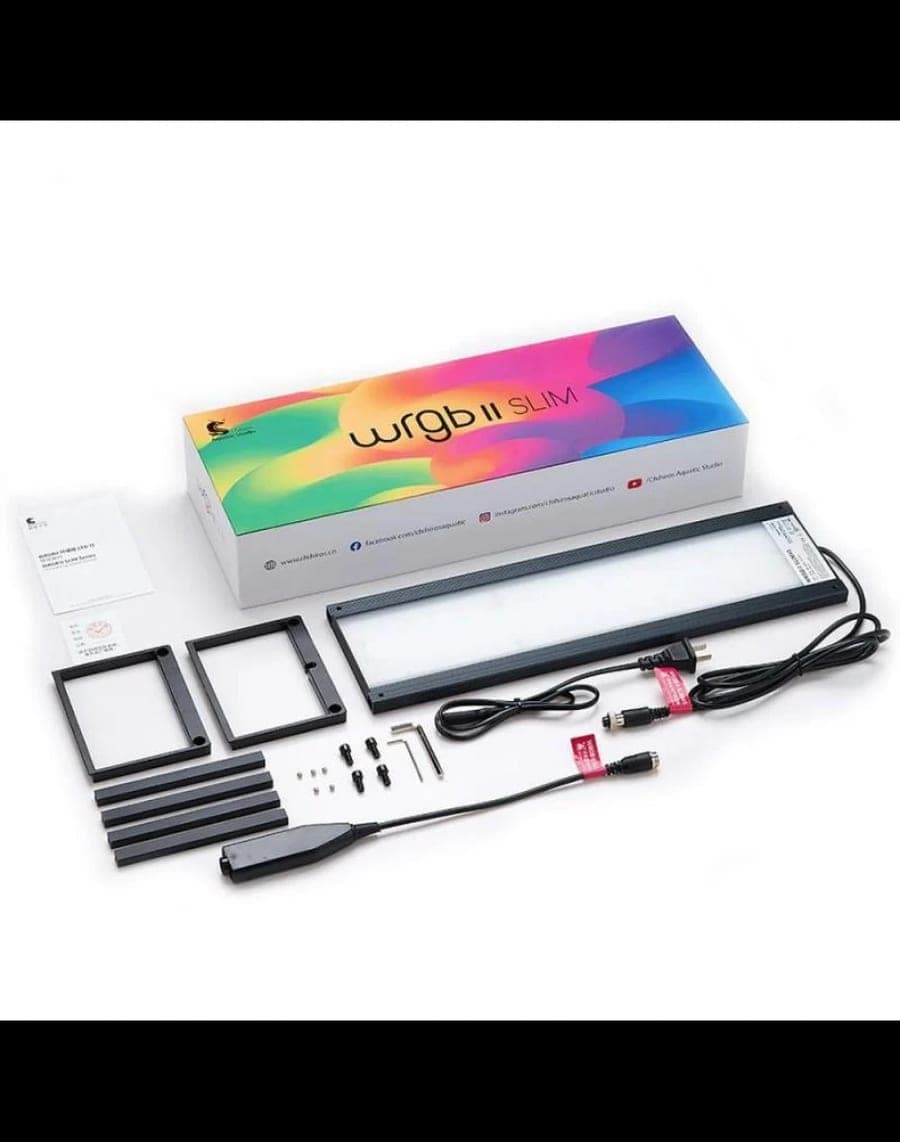
Plants grow well under both. RGB lights mainly change how the tank looks, making reds and greens more vivid, while full-spectrum white around 6500-7000K gives a natural look. Brightness and duration matter far more for growth than colour.
Yes — excess light is the most common cause of algae in planted tanks. If light outpaces the CO2 and nutrients available, plants can't use it and algae does. Reduce intensity or hours, or add CO2 and fertiliser to match.
Understand the physics of high turn-over biological canisters & hardscaping in our next 2-day session.