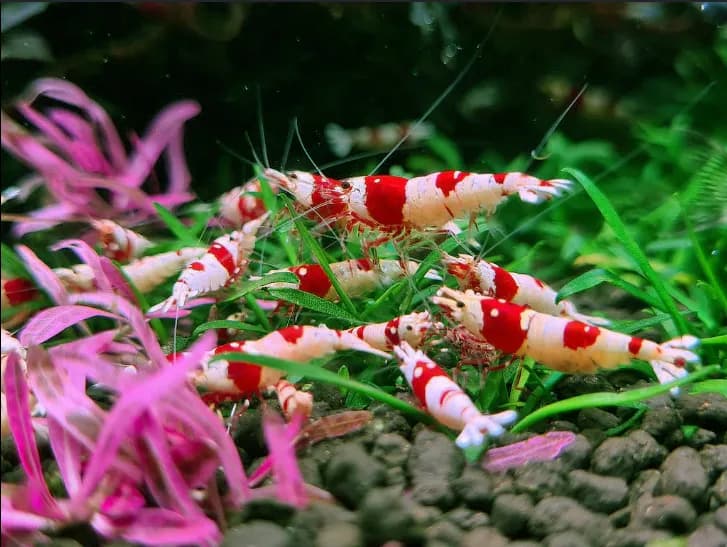
Crystal Red Shrimps and Neocaridina Shrimps require a stabilized mature ecosystem. Check out our high-density biological filtration recommendations, temperature controls, and water mineral rules.
Keeping ornamental shrimp is one of the most rewarding branches of modern aquascaping. Crystal Red Shrimp (Caridina cantonensis) and Neocaridina species (Cherry, Blue Velvet, Blue Dream) are highly sensitive to water quality — a parameter swing that a fish would barely notice can wipe out an entire shrimp colony overnight. The good news: once you understand what they need, shrimp are surprisingly consistent and will reward you with hundreds of offspring. Here are our top 10 rules for thriving ornamental shrimp.
- Never rush cycle: A shrimp tank needs mature biological layers, especially a thick biofilm on every surface. Cycle the tank for minimum 4-6 weeks before introduction. Add a handful of dried leaves (Indian almond or banana leaf) during cycling to seed biofilm growth.
- Buffering Substrate: Always choose a soil that actively buffers pH down to 6.0-6.5 (like ADA Amazonia or Tropica Soil) for Caridinas. Neocaridinas are more flexible — they tolerate plain inert substrate with stable tap water.
- Use Reverse Osmosis (RO) Water with GH+: Do not use tap water that fluctuates in hardness. Remineralize RO water to around 110-130 TDS for Caridinas using Salty Shrimp GH+. For Neocaridinas, use Salty Shrimp GH/KH+ and target 150-200 TDS.
- Acclimatize Extensively: Use slow drip acclimation over 2-3 hours. The osmotic shock of going from the breeder's water to yours — even if parameters are similar — is the single biggest cause of death in newly purchased shrimp.
- Feed Biofilm and Microorganisms: GlasGarten Bacter AE is a biofilm booster that creates microbial life vital for juvenile survival. Dose twice weekly during cycling and continue at reduced rate once shrimp are introduced.
- Temperature Stability: Shrimp thrive at a stable 22-24 degrees Celsius. Fluctuations above 28 degrees Celsius are life-threatening. During Indian summers, use clip-on cooling fans above the water surface — evaporative cooling can drop water temperature by 2-3 degrees Celsius.
- Safe Sponge Filters: Cover canister filter inlets with fine intake sponges to prevent baby shrimp (less than 3mm) from being sucked in. Sponge filters are ideal for dedicated shrimp tanks as they also cultivate biofilm.
- Periodic small water changes: Perform 10% water changes weekly using perfectly matched parameters rather than massive 50% changes. Always use a drip method or a slow siphon — the pressure differential from fast bucket water changes stresses shrimp.
- No Heavy Metals: Copper is acutely toxic to all invertebrates at even trace levels. Check every medication, fertilizer, and water conditioner for copper content. API Leaf Zone, certain flea treatments for pets, and some tap water conditioners contain copper. Use only invert-safe products.
- Incorporate Aquatic Moss: Fissidens, Java Moss, Subwassertang, and Flame Moss provide excellent grazing pads where biofilm accumulates. Baby shrimp spend almost all their time in moss during their first two weeks of life.
Water Parameters Reference
| Parameter | Caridina (Crystal Red, Crystal Black, Taiwan Bee) | Neocaridina (Cherry, Blue Velvet) |
|---|
| pH | 6.0–6.5 | 6.8–7.5 |
| TDS | 100–150 ppm | 150–250 ppm |
| Temperature | 20–24°C | 20–26°C |
| GH | 4–6 | 6–10 |
| KH | 0–1 | 2–6 |
Stability matters more than hitting exact numbers — a steady pH of 6.3 is safer than one that swings between 6.0 and 7.0 daily.
Feeding Schedule
Shrimp graze constantly and do not need large meals. Overfeeding is the leading cause of ammonia spikes in shrimp tanks. Follow this weekly rotation: Monday and Thursday — GlasGarten Shrimp Baby Bites (protein-rich pellet), Tuesday — GlasGarten Bacter AE (biofilm booster, half a scoop per 50 litres), Wednesday — blanched spinach or zucchini slice (remove after 2 hours), Friday — specialty shrimp wafer (Hikari Shrimp Cuisine or Glasgarten Mineral Junkie). Always remove uneaten food within 2 hours to prevent ammonia build-up.
Compatible Tankmates
Keep ornamental shrimp in a species-only tank or with extremely peaceful, small fish that cannot fit a shrimp in their mouth. Safe companions include:
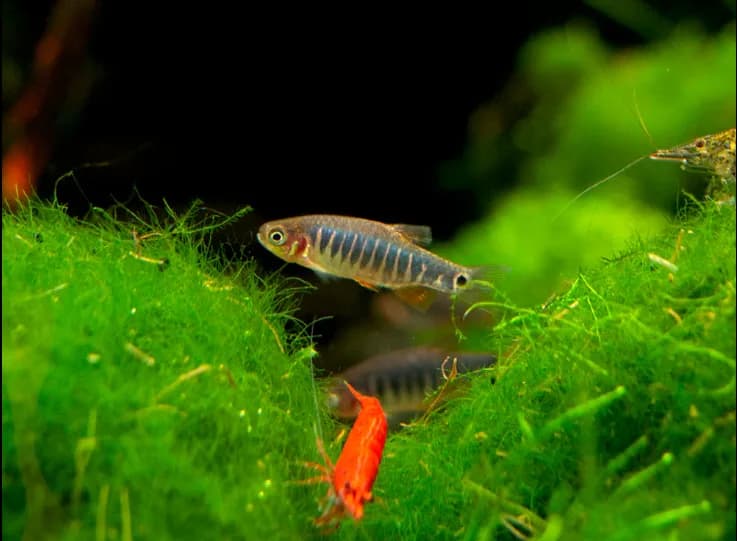
- Ember Tetras (Hyphessobrycon amandae): Tiny mouths, max 2 cm, completely ignore adult shrimp
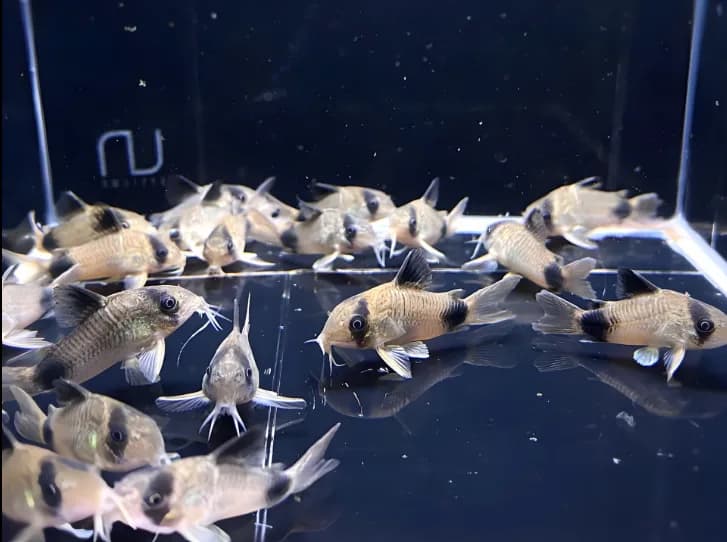
- Pygmy Corydoras (Corydoras pygmaeus): Peaceful bottom dwellers that compete for leftover food, keeping the substrate clean
- Otocinclus catfish: Algae grazers that completely ignore shrimp even at juvenile stages
- Ramshorn and Nerite snails: Clean up leftover food and algae; beneficial, not harmful
- Other shrimp species: Neocaridina and Caridina can be kept together if water parameters overlap, though they will not interbreed
Never house ornamental shrimp with cichlids, angelfish, goldfish, bettas (especially with juveniles), or any fish whose mouth exceeds 1.5 cm. Even "peaceful" fish like cardinal tetras will opportunistically eat baby shrimp.
Common Diseases and Treatment
- Scutariella japonica (nose worms): Thin white worms visible on the shrimp's rostrum (nose) or between the eyes. Treat with a Potassium Hydrogen Phosphate (KH2PO4) bath — 1 teaspoon per 5 litres for 30 seconds — or dose with Safeguard (fenbendazole-based). Quarantine affected shrimp first to prevent spread.
- Vorticella (bacterial fluff): White fuzzy growths on the body, legs, or rostrum. Caused by poor water quality and high organic load. Perform 10-15% water changes for three consecutive days, siphon the substrate thoroughly, and dose with a probiotic supplement like GlasGarten Dino Shield.
- Chitinolytic Bacterial Disease (CBD): Progressive whitening or opacity spreading from the tail forward. Highly contagious and often fatal. Remove affected shrimp to a separate container immediately. Treat the main tank with hydrogen peroxide (1 ml per 50 litres for three days). CBD is almost always triggered by severe stress — check parameters, temperature, and recent changes to the tank.
- Molting failure (trapped in molt): Shrimp found dead half-stuck in its own shell. Cause is GH too low (mineral deficiency) or a sudden temperature drop. Ensure GH stays between 4-6 for Caridinas and remineralise with Salty Shrimp GH+. Maintain stable temperature — never let it drop more than 1 degree Celsius in 24 hours.
Understand the physics of high turn-over biological canisters & hardscaping in our next 2-day session.