Cute bottom-dwelling catfish that need soft sand, groups of 6 individuals or more, and high dissolved oxygen. Learn how to prevent barbel erosion and select safe sand substrate layers.
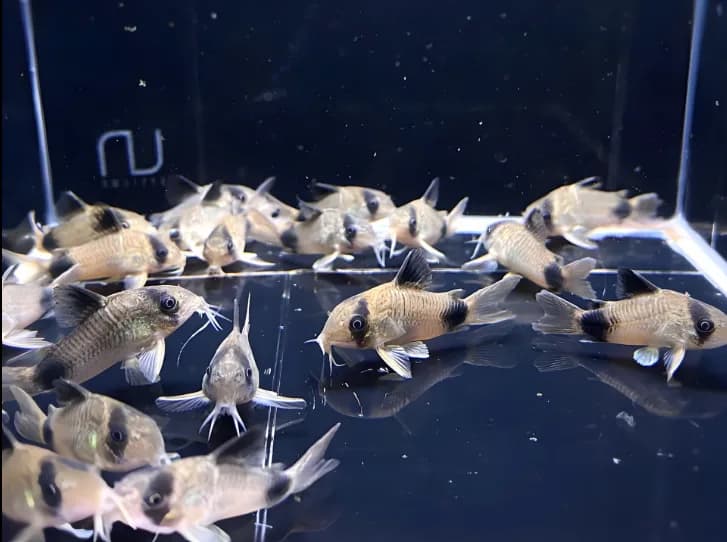
Panda Corydoras (Corydoras panda) are peaceful, schooling bottom dwellers native to the upper Rio Ucayali basin in Peru. Named for their striking black-and-white panda-like markings, these small catfish (maximum 4-5 cm) bring enormous personality to a planted aquarium. They forage in tight groups, communicate through body posture, and will actually play — darting upward together and spiralling back down. To keep their behavior natural and their barbels healthy, follow these 10 guidelines.
- Substrate selection is critical: Use only fine-grained, smooth, natural sand — cosmetic sand or pool-filter silica sand works perfectly. Sharp substrate, coarse gravel, or soil all erode the delicate barbels (whiskers) around the mouth, which leads to bacterial infection and eventual loss of the barbels entirely. A Corydoras without barbels cannot forage efficiently and is permanently stressed.
- Keep them in schools of 8 or more: Panda Corydoras are intensely social. Keeping fewer than 6 causes chronic stress that suppresses their immune systems. A school of 8-10 will show natural synchronised foraging, spawning behaviour, and be significantly hardier overall.
- Over-filter the bottom zone: Corydoras are messy feeders that stir up settled detritus constantly. Run a high-turnover canister filter (Oase BioMaster or Eheim Classic) combined with a gentle internal filter aimed at the bottom. Target a flow rate of 10x tank volume per hour.
- Keep temperatures cool: Panda Corys are a highland species from Andean foothill streams — their natural habitat averages 20-23 degrees Celsius. Keeping them consistently above 25 degrees Celsius compromises their immunity and shortens their lifespan. Use a cooling fan during Indian summers or limit temperatures to a maximum of 24.5 degrees Celsius.
- Provide hiding spots and low light areas: Flat river stones, terracotta caves, hollow driftwood, and broad-leafed plants like Anubias and Cryptocoryne give them places to rest and feel secure during the day. Corydoras are crepuscular — most active at dawn and dusk.
- Feed sinking-specific foods: Never assume Corydoras survive on floating flake leftovers. They need dedicated sinking tablets placed near their favourite resting spots. Hikari Sinking Wafers, Sera Catfish Chips, and Tetra Tabimin are excellent staples.
- Ensure high dissolved oxygen: Corydoras use intestinal respiration — they occasionally dash to the surface to gulp air. While this is normal, frequent surface dashes indicate low dissolved oxygen. Maintain strong surface agitation through your filter output, and add an airstone if surface movement is minimal.
- Soft, mildly acidic to neutral water: They thrive at pH 6.0-7.2, GH 2-12, KH 1-8, TDS 100-250 ppm. They are one of the more adaptable Corydoras species, tolerating a wider range than many corys, but extremes in any direction cause long-term stress.
- Vacuum the sand weekly: Fine sand compacts and traps uneaten food, fish waste, and detritus. Use a narrow-nozzle siphon to vacuum just above the surface of the sand weekly — this removes the waste layer without disturbing the sand depth. Ammonia and nitrite spikes in Corydoras tanks often trace back to a dirty substrate.
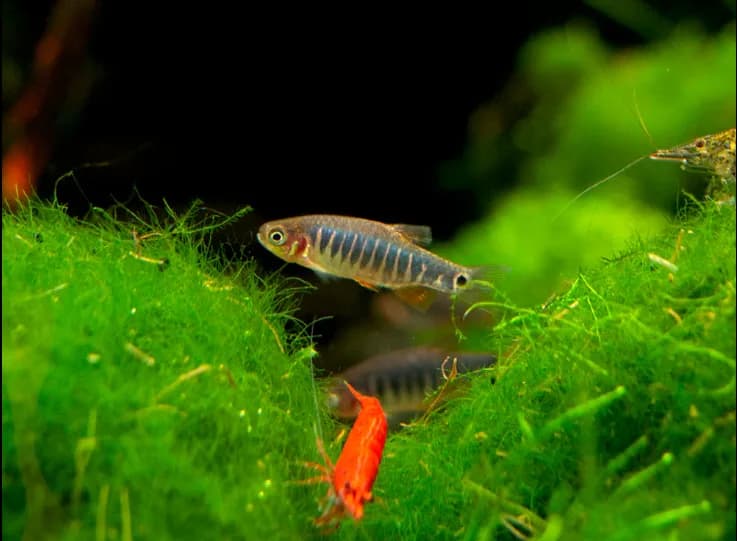
- Choose peaceful tankmates only: Co-keep with tetras, rasboras, danios, livebearers, Otocinclus, or dwarf shrimp (adults only). Any fish that nips fins — tiger barbs, serpae tetras, some gouramis — will target the Corydoras' flowing fins. Even mild fin nipping invites infection.
Water Parameters Reference
Target: pH 6.5-7.2, TDS 100-200 ppm, Temperature 20-24 degrees Celsius, GH 4-8, KH 2-6. Ammonia and nitrite should always read zero. Nitrates should stay below 20 ppm with regular water changes. Panda Corys are particularly sensitive to nitrate accumulation — tanks with planted substrate and heavy planting naturally keep nitrates low.
Feeding Schedule
Feed once or twice daily, only what they consume in 3-5 minutes. Rotate foods for nutritional variety: Monday and Thursday — Hikari Sinking Wafers (main staple), Tuesday — frozen or live bloodworms (thawed and rinsed), Wednesday — Sera Catfish Chips or Tetra Tabimin, Friday — blanched spinach, zucchini, or cucumber slice (remove after 1 hour), Weekend — Repashy gel food (Bottom Scratcher formula) or Sera Vipan Nature flakes scattered to sink slowly. Panda Corys are shy feeders — turn off strong flow at feeding time so food settles.
Compatible Tankmates
Panda Corydoras are among the easiest fish to match with community tankmates. Ideal companions include:
- Cardinal and Rummy Nose Tetras: Mid-water schooling fish, completely ignore corydoras
- Harlequin Rasboras and Ember Tetras: Peaceful, similar size requirements
- Dwarf Gouramis (single specimen, peaceful strains only): Occupy surface and mid-water, do not bother bottom feeders
- Otocinclus catfish: Fellow algae/biofilm grazers with identical water requirements
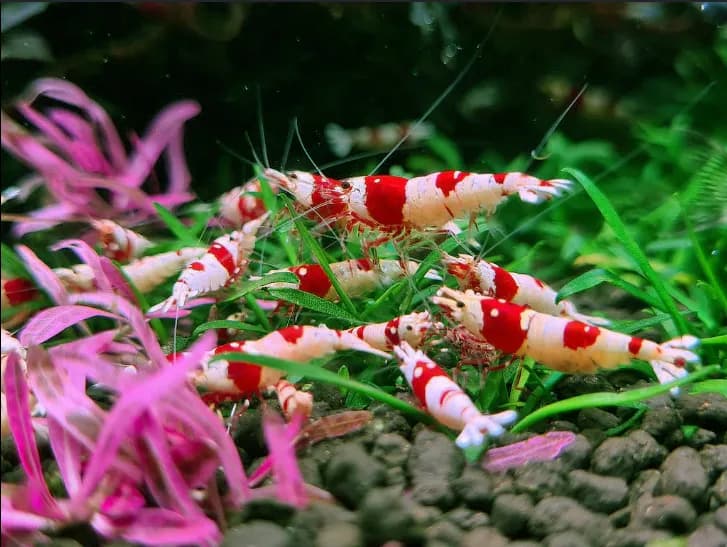
- Adult Neocaridina shrimp: Large enough not to be eaten; help clean up leftover food
Avoid fin-nippers (tiger barbs, serpae tetras), cichlids of any kind, and any fish over 10 cm that might view Corydoras as food. Avoid keeping with other Corydoras species unless tank is very large — inter-species hybridisation is common with closely related Corys.
Common Diseases and Treatment
- Red blotch disease (hemorrhagic septicemia): Bright red blotches on the body and belly, caused by Aeromonas bacteria. Primary trigger is a dirty, hypoxic substrate. Deep-clean the substrate, perform 30% water change, and treat with a broad-spectrum antibacterial (Interpet Anti Bacterial or Sera Baktopur).
- Columnaris (saddle fungus): White or grey lesions on the back behind the dorsal fin, often resembling a saddle. Caused by Flavobacterium columnare in water with high organic load. Treat with a combination of aquarium salt (1 g/L) and an antibacterial medication.
- Barbel erosion and rot: Gradual shortening of the barbels, often followed by red infection at the base. Almost always caused by sharp or dirty substrate. Switch to fine sand immediately, deep-vacuum the tank, and apply topical treatment with Sera Baktopur or API Melafix for 5-7 days.
- White spot (Ich): Small white salt-grain spots across the body and fins. Panda Corys are temperature-sensitive, so avoid raising the temperature above 27 degrees Celsius (the usual Ich treatment method). Instead, use a low-dose copper treatment (API Super Ick Cure) at half the recommended dose, or a formalin-based treatment at reduced concentration.
Understand the physics of high turn-over biological canisters & hardscaping in our next 2-day session.